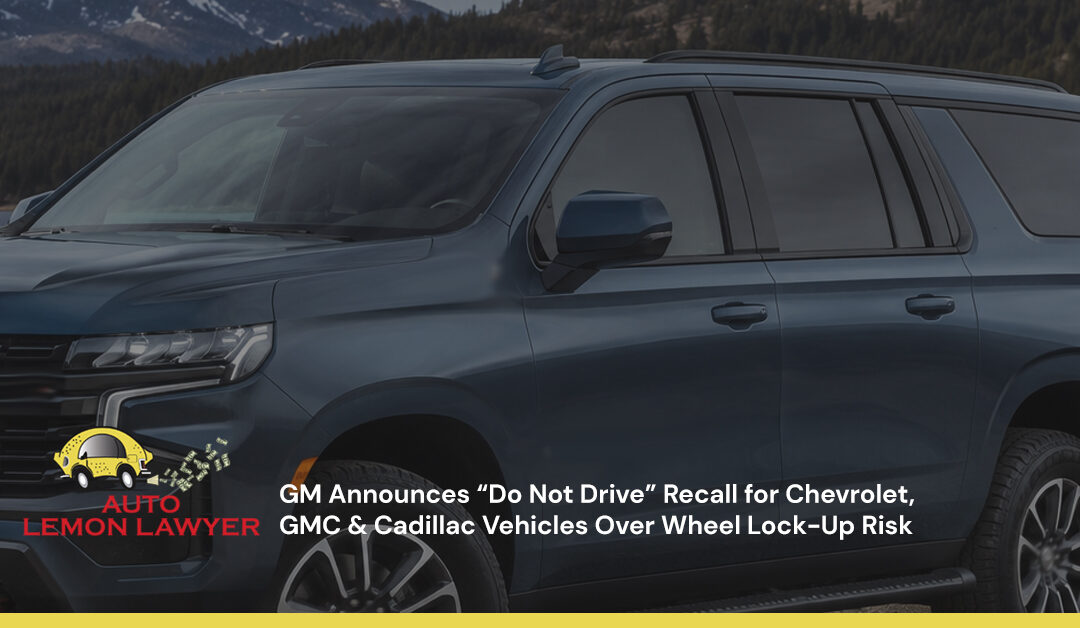
General Motors (GM) has issued an urgent “Do Not Drive” safety recall affecting certain Chevrolet, GMC, and Cadillac trucks and SUVs after discovering a potentially dangerous defect that could cause the wheels to lock up unexpectedly while driving. The recall impacts select four-wheel-drive (4WD) and all-wheel-drive (AWD) vehicles equipped with defective transfer case assemblies that may have been manufactured without a critical internal component.
According to the National Highway Traffic Safety Administration (NHTSA) Safety Recall Report, the defect could dramatically increase the risk of a crash by causing the front and/or rear wheels to suddenly seize while the vehicle is in motion.
For affected owners, GM’s message is unusually serious: Do Not Drive the Vehicle Until Repairs Are Completed.
Why Is GM Telling Owners Not to Drive These Vehicles?
The issue stems from a missing oil pickup tube inside the transfer case assembly. The transfer case is a key drivetrain component used in 4WD and AWD vehicles to distribute power between the front and rear wheels.
According to GM’s safety recall report, some transfer cases were assembled without the oil pickup tube due to manufacturing process failures at a supplier facility in Mexico. Without proper lubrication, the transfer case bearings can fail, potentially causing sudden wheel lock-up.
The recall report states: “A component missing from the drivetrain transfer case may cause the front and/or rear wheels to lock-up without warning to the driver.”
In some cases, drivers may hear a grinding noise before the failure occurs, but GM warns that wheel lock-up could happen without significant warning signs.
Vehicles Included in the Recall
The recall affects a limited number of 4WD and AWD General Motors vehicles, including certain:
- 2026 Cadillac Escalade
- 2026 Cadillac Escalade ESV
- 2026 Chevrolet Silverado 1500
- 2026 Chevrolet Tahoe
- 2026 Chevrolet Suburban
- 2026 GMC Sierra 1500
- 2026 GMC Yukon
- 2026 GMC Yukon XL
- 2015-2020 Cadillac Escalade
- 2015-2020 Cadillac Escalade ESV
- 2015-2020 Chevrolet Tahoe
- 2015-2020 Chevrolet Suburban
- 2015-2020 GMC Yukon
- 2015-2020 GMC Yukon XL
Importantly, GM states that this recall only affects vehicles equipped with four-wheel-drive or all-wheel-drive systems. Rear-wheel-drive or two-wheel-drive versions are not included.
The recall also includes one replacement transfer case assembly that may have been installed as a service part in certain 2015–2020 GM trucks and SUVs.
What Caused the Defect?
According to GM, the problem originated during changes made to the supplier’s assembly line processes.
The NHTSA recall report explains that the supplier failed to properly follow standardized manufacturing procedures and error-detection protocols during production. As a result, some transfer cases were assembled without the oil pickup tube, and the company’s quality-control systems failed to catch the incomplete assemblies before shipment.
GM identified 68 suspect transfer case assemblies during its investigation. Of those:
- 46 were installed in 2026 production vehicles
- One was distributed as a replacement service part
- 21 previously serviced vehicles may have received defective replacement transfer cases
Has GM Reported Any Crashes or Injuries?
At the time of the recall announcement, GM stated it was aware of four field complaints potentially related to the issue but said it had not identified any crashes or injuries connected to the defect.
The investigation reportedly began after a 2026 Chevrolet Silverado 1500 experienced wheel lock-up in a parking lot. Engineers later discovered that the transfer case was missing the oil pickup tube required for proper lubrication.
What Should Affected Owners Do?
GM advises affected owners to stop driving their vehicles immediately until the recall repair has been completed.
The automaker says dealerships will inspect the transfer case assembly and replace it if necessary. GM also indicated it would assist owners with towing vehicles to dealerships for inspection and repairs.
Owners can check whether their vehicle is included by searching their VIN through:
According to the recall filing, owner notification letters are expected to begin mailing on June 22, 2026.
What Happens if Your Vehicle Continues to Have Problems After Recall Repairs?
Safety recalls are intended to correct dangerous defects, but in some cases, vehicles continue to experience repeated problems even after repairs are attempted. Drivers may encounter recurring drivetrain issues, persistent warning lights, vibrations, unusual noises, or additional mechanical failures related to the transfer case or four-wheel-drive system.
If your GM vehicle repeatedly returns to the dealership for the same issue — or spends an excessive amount of time out of service — you may have legal rights under your state’s lemon law protections.
Understanding Your Rights Under the Lemon Law
State lemon laws generally protect consumers who purchase or lease defective vehicles that cannot be repaired within a reasonable number of attempts. Depending on your state and the circumstances surrounding the defect, you may qualify for compensation such as:
- Vehicle repurchase or buyback
- Vehicle replacement
- Cash settlement
- Reimbursement for repair-related expenses
A serious safety defect involving wheel lock-up or drivetrain failure may strengthen a consumer’s claim, particularly if the issue substantially impairs the vehicle’s use, value, or safety.
Contact Auto Lemon Lawyer
If your Chevrolet, GMC, or Cadillac vehicle has experienced recurring transfer case issues, drivetrain failures, wheel lock-up incidents, or repeated recall-related repairs, the legal team at Auto Lemon Lawyer may be able to help you understand your options.
An experienced lemon law attorney can review your repair history, determine whether your vehicle may qualify under applicable state lemon laws, and help you pursue compensation if your vehicle continues to experience unresolved defects.
Contact Auto Lemon Lawyer today for a free consultation and find out if you qualify for compensation under your state’s lemon laws.

Lucas graduated cum laude from Southern University Law Center in 2025, finishing second overall in his graduating cohort. He was a recipient of the Southern University Law Center Merit Scholarship, awarded to students in the top five percent (5%) of the class based on merit, academic performance, and character. Lucas is admitted to practice law in the State of Louisiana. While his time in formal legal practice is recent, he has been part of the Auto Lemon Lawyer team for over five years, during which he has worked in every position within the firm. This experience provides him with a comprehensive understanding of Lemon Law cases from intake through litigation and resolution.