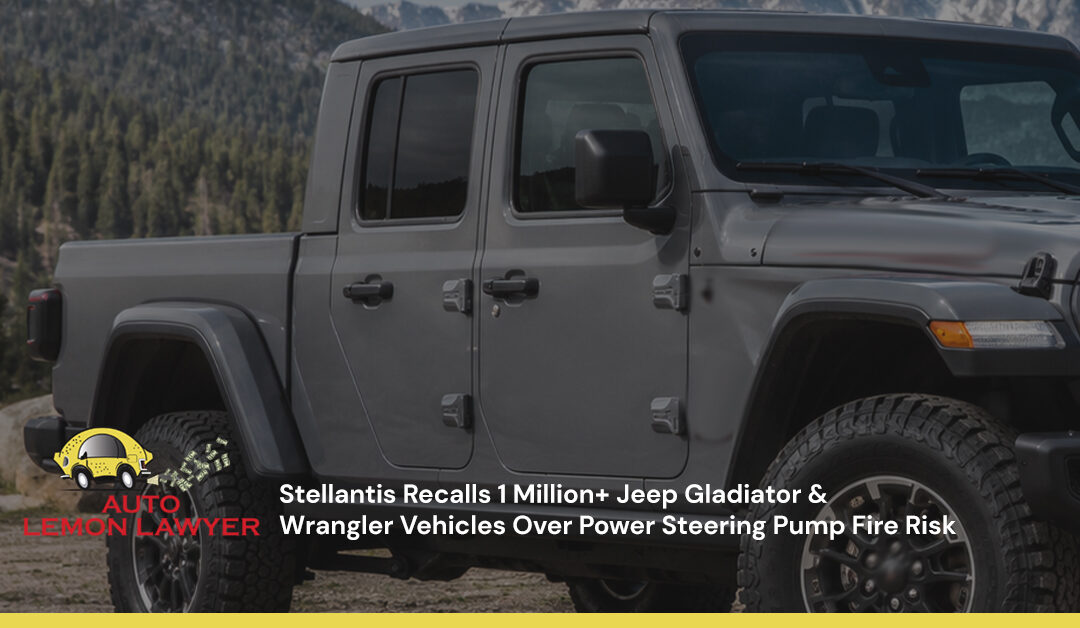
Owners of certain Jeep Wrangler and Jeep Gladiator vehicles are being urged to take immediate action after Stellantis announced a massive safety recall affecting more than one million vehicles due to a fire risk associated with the power steering system.
According to the National Highway Traffic Safety Administration (NHTSA), a defect involving the Electric Hydraulic Power Steering Pump (EHPSP) electrical connection can cause overheating, potentially resulting in an engine compartment fire. In response, Stellantis is advising affected owners to park their vehicles outside and away from structures until repairs can be completed.
Recall Overview
The recall affects approximately 1,076,999 vehicles in the United States and includes certain 2021-2025 Jeep Wrangler and Jeep Gladiator models. According to Stellantis, an electrical connection associated with the Electric Hydraulic Power Steering Pump may develop high resistance, creating excessive heat that can ignite surrounding materials.
Vehicles Affected
| Vehicle | Model Years | Production Dates | Number Affected |
| Jeep Wrangler | 2021-2025 | June 24, 2020 – December 2, 2024 | 787,887 |
| Jeep Gladiator | 2021-2025 | August 18, 2020 – December 2, 2024 | 289,112 |
| Total | 1,076,999 |
Source: NHTSA Recall No. 26V363
What Is Causing the Fire Risk?
According to the recall report, Stellantis identified a problem involving the electrical connection at the Electric Hydraulic Power Steering Pump. In some vehicles, the connection may develop excessive electrical resistance.
When resistance builds, heat can accumulate at the connection point. Under certain circumstances, that heat can melt components and ignite combustible materials within the engine compartment or surrounding area. Stellantis ultimately confirmed that a loose electrical connection could result in melting of the connection and potentially lead to a vehicle fire.
The automaker’s investigation found that manufacturing tolerances associated with the EHPSP connector assembly may have contributed to improperly seated electrical connections and spread terminals, both of which can increase electrical resistance.
What Warning Signs Might Owners Notice?
Some affected owners may experience symptoms before a fire occurs.
Potential warning signs include:
- Loss of power steering assist
- Increased steering effort
- “Service Power Steering” warning messages
- Diagnostic trouble codes related to the power steering system
- Burning odors or signs of overheating near the engine compartment
However, not every vehicle will provide warning signs before an incident occurs.
Stellantis and NHTSA Investigation Timeline
The recall follows a lengthy investigation by both Stellantis and federal safety regulators.
According to the recall report:
- Stellantis initially investigated fires linked to the power steering connection between May 2023 and April 2024.
- The investigation was reopened in August 2024 after additional incidents were reported.
- NHTSA launched a formal investigation (PE24-024) in September 2024.
- Throughout 2025, Stellantis analyzed vehicle fires, inspected returned components, performed CT scans and X-rays, and conducted extensive testing.
- In April 2026, Stellantis confirmed that a loose electrical connection could lead to melting and vehicle fires.
- On May 28, 2026, the company formally determined that a safety defect existed.
As of May 18, 2026, Stellantis reported:
- 72 field reports potentially related to the issue
- 35 confirmed incidents originating at the EHPSP connection
- 63 customer assistance records
- 1 reported injury potentially related to the defect
- No known crashes associated with the issue
What Should Jeep Owners Do?
Stellantis is advising affected owners to:
- Check whether their vehicle is included in the recall.
- Park the vehicle outside and away from structures.
- Schedule a recall inspection with an authorized Jeep dealer.
- Monitor for power steering warnings or unusual odors.
- Keep documentation related to repairs and recall service.
Dealers will inspect affected vehicles and repair or replace components as necessary at no cost to owners. Stellantis expects owner notifications to begin on or around July 9, 2026.
Could This Defect Support a Lemon Law Claim?
A recall alone does not automatically qualify a vehicle as a lemon. However, recurring safety-related defects can sometimes form the basis of a lemon law claim.
If your Jeep Wrangler or Gladiator has experienced:
- Multiple repair attempts for the same problem,
- Repeated power steering failures,
- Electrical system issues,
- Persistent warning lights,
- Vehicle fires or overheating incidents,
- Extended time out of service for repairs,
you may have legal rights under your state’s lemon law or warranty protection statutes.
In many states, manufacturers must either repurchase or replace vehicles that cannot be repaired within a reasonable number of attempts.
Speak With a Lemon Law Attorney
Safety recalls involving fire risks are serious, especially when they affect more than one million vehicles. If your Jeep Wrangler or Gladiator has repeatedly experienced power steering, electrical, or fire-related problems, it may be worth having your situation reviewed by an experienced lemon law attorney.
Auto Lemon Lawyer helps consumers understand their rights and determine whether they may qualify for compensation, a vehicle buyback, or a replacement vehicle under applicable lemon law protections. Contact Auto Lemon Lawyer today for a free case review and find out whether you may be entitled to a vehicle buyback, replacement, or other compensation under your state’s lemon law.

Lucas graduated cum laude from Southern University Law Center in 2025, finishing second overall in his graduating cohort. He was a recipient of the Southern University Law Center Merit Scholarship, awarded to students in the top five percent (5%) of the class based on merit, academic performance, and character. Lucas is admitted to practice law in the State of Louisiana. While his time in formal legal practice is recent, he has been part of the Auto Lemon Lawyer team for over five years, during which he has worked in every position within the firm. This experience provides him with a comprehensive understanding of Lemon Law cases from intake through litigation and resolution.