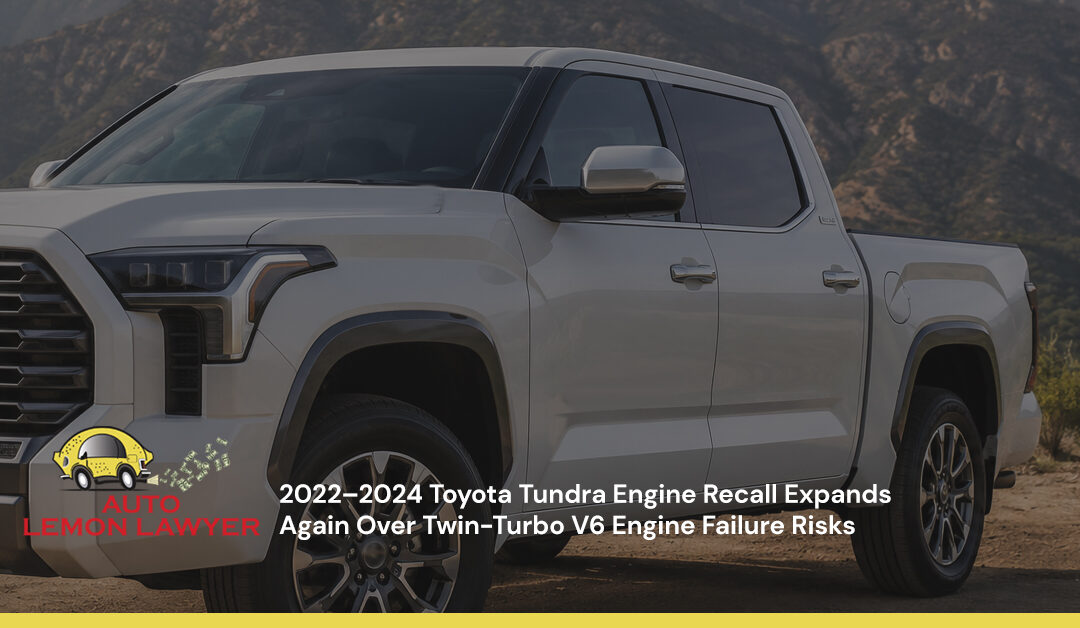
Toyota’s ongoing engine troubles involving the latest-generation Toyota Tundra continue to escalate in 2026, with the automaker announcing yet another expansion tied to its twin-turbocharged V6 engine failures. For many truck owners, the newest recall news raises a troubling question: has Toyota truly solved the problem, or is this reliability crisis still unfolding?
The latest developments involve additional recalls affecting thousands of 2024 Tundra models after Toyota reportedly discovered that prior remedies may not have fully corrected the issue. According to Toyota and multiple automotive industry reports, debris left inside engines during manufacturing may still lead to catastrophic engine damage, loss of power, knocking, or complete engine failure.
What Is Causing the Toyota Tundra Engine Failures?
The controversy centers around Toyota’s 3.4-liter twin-turbocharged V6 engine used in newer Tundra pickups and certain Lexus SUVs. Investigators and recall notices point to machining debris that may not have been properly cleaned from engine components during manufacturing. Over time, that debris can damage internal bearings and other engine parts.
Toyota says the contamination can result in:
- Engine knocking
- Rough engine operation
- Sudden power loss
- Engine seizure or complete failure
- Increased crash risk if the truck stalls while driving
Toyota had already issued major recall campaigns in 2024 and 2025 affecting well over 200,000 vehicles. However, the company recently expanded the recall again to include approximately 44,000 additional 2024 Tundras after discovering that previous repairs may not have adequately addressed the defect in some vehicles.
According to reports, the total number of recalled vehicles tied to Toyota’s twin-turbo V6 problems is now approaching 270,000.
Owners Are Growing Increasingly Frustrated
Toyota has long been viewed as one of the most reliable automakers in the world, which is part of why these Tundra engine failures have generated so much attention online and across the automotive industry.
Some owners report waiting months for replacement engines or repairs. Others claim engines failed even after prior recall work was completed. Automotive publications covering the issue note that owner patience is “running thin” as the recall continues to expand.
Several reports also raise concerns about diminished resale value for affected trucks. Even after repairs, some owners worry the stigma surrounding the engine failures may permanently impact vehicle value and buyer confidence.
Consumer discussions online suggest some owners remain hesitant to trust the long-term reliability of repaired engines. While not every Tundra experiences problems, the scale and persistence of the recall have created uncertainty for many truck buyers.
Which Toyota Tundra Models Are Affected?
The recall history has expanded over multiple years and campaigns. Reports indicate affected vehicles primarily include:
- Certain 2022–2024 Toyota Tundra models
- Some non-hybrid Tundras equipped with the twin-turbo V6
- Additional 2024 Tundras added in the newest expansion
- Certain Lexus LX and GX SUVs using related engines
Toyota has stated that hybrids were initially excluded from some recall campaigns, though online discussions and owner reports have raised questions about whether hybrid models could eventually face similar scrutiny.
Owners can check their VIN through Toyota or the National Highway Traffic Safety Administration (NHTSA) to determine whether their vehicle is included in an active recall.
What Should Tundra Owners Watch For?
If you own a recalled Toyota Tundra, warning signs may include:
- Knocking or ticking noises from the engine
- Sudden loss of power
- Rough idling
- Dashboard warning lights
- Engine hesitation
- Metal debris found during service inspections
Any symptoms involving stalling or loss of power should be taken seriously, especially while driving at highway speeds or towing.
Can Toyota Tundra Owners Qualify Under Lemon Law?
For some owners, repeated engine failures, lengthy repair delays, or unsuccessful recall repairs may potentially support a lemon law claim depending on the state and circumstances.
Generally, a vehicle may qualify as a lemon if:
- The manufacturer cannot repair a substantial defect within a reasonable number of attempts
- The vehicle spends an excessive number of days out of service
- The defect substantially impacts use, safety, or value
Engine failure claims often receive significant attention in lemon law cases because powertrain defects can create major safety and reliability concerns.
Even if a recall exists, that does not necessarily prevent a vehicle owner from pursuing compensation under state lemon laws. In some situations, repeated recall repairs or unsuccessful fixes may strengthen a claim.
The Bigger Problem for Toyota
Toyota built its reputation on durability and long-term dependability. That is why this ongoing Tundra engine controversy has become such a major story in the automotive world.
The continued expansion of recalls, combined with reports that earlier fixes may not have fully solved the problem, risks damaging consumer confidence in one of Toyota’s flagship trucks. Industry analysts note that reliability concerns can linger long after recall repairs are completed.
For owners experiencing repeated breakdowns, engine replacements, or prolonged repair delays, understanding your legal options may be important.
If your Toyota Tundra has suffered recurring engine problems, repeated repair attempts, or extended downtime, Auto Lemon Lawyer may be able to help you determine whether your truck qualifies under your state’s lemon law. Contact us today for a free consultation.

Lucas graduated cum laude from Southern University Law Center in 2025, finishing second overall in his graduating cohort. He was a recipient of the Southern University Law Center Merit Scholarship, awarded to students in the top five percent (5%) of the class based on merit, academic performance, and character. Lucas is admitted to practice law in the State of Louisiana. While his time in formal legal practice is recent, he has been part of the Auto Lemon Lawyer team for over five years, during which he has worked in every position within the firm. This experience provides him with a comprehensive understanding of Lemon Law cases from intake through litigation and resolution.